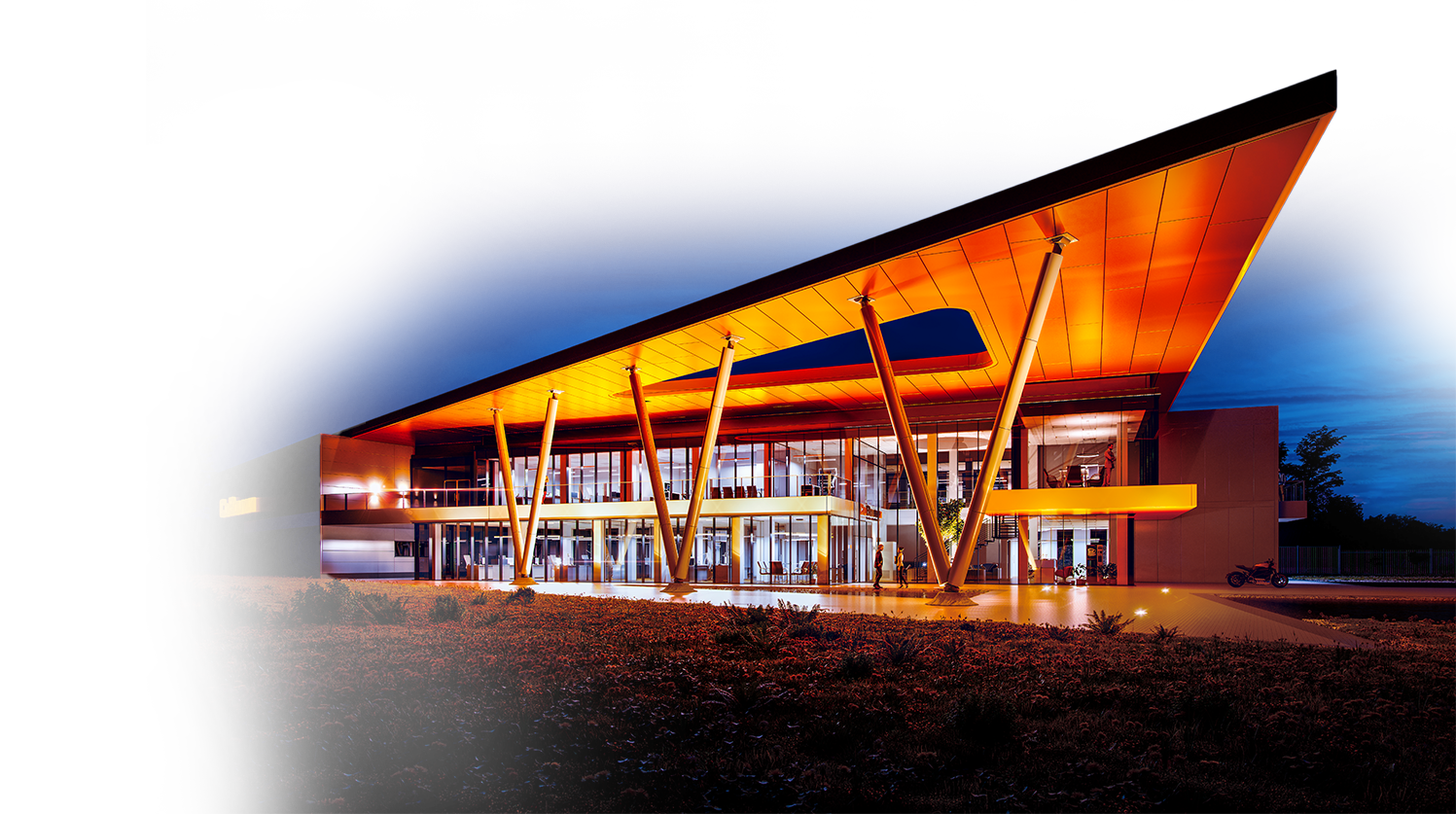
Hybrid facilities

High fire resistance and span thanks to reinforced concrete columns and steel girders.

Application of hybrid halls

Hybrid halls – modern solutions for industry and logistics.

Hybrid halls combine the advantages of reinforced concrete and steel. Precast reinforced concrete columns form the main load-bearing structure, while a lightweight steel roof structure, constructed from trusses or plate girders, ensures flexibility and cost optimization. This combination is particularly effective in logistics centers and warehouses, where the high fire resistance of reinforced concrete and the ease of installation on a steel roof are essential. A hybrid structure is also ideal for manufacturing plants – the massive reinforced concrete columns effectively support overhead crane loads and are resistant to damage in operational areas. Thanks to these features, hybrid halls are ideal for facilities with stringent fire safety requirements, offering a naturally high fire resistance rating.
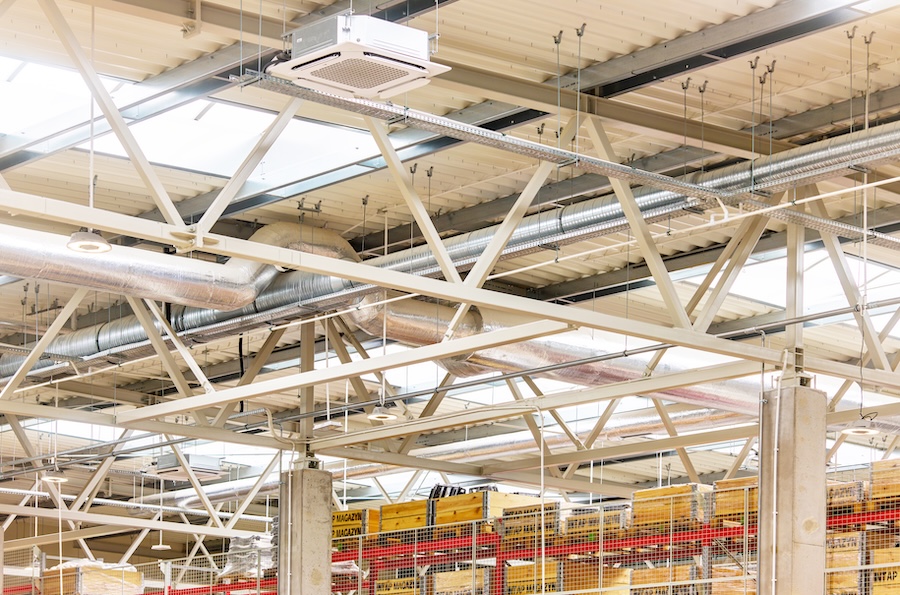
Advantages of hybrid halls

Why is it worth choosing steel halls?

Fire resistance

Durability and mechanical resistance

Cost effectiveness

Speed ​​and ease of installation

Why is it worth combining steel with concrete?

Contact us – we will propose the best solutions for your investment.

Send inquiry

Safety, durability and cost optimization

Advantages of investing in hybrid halls.
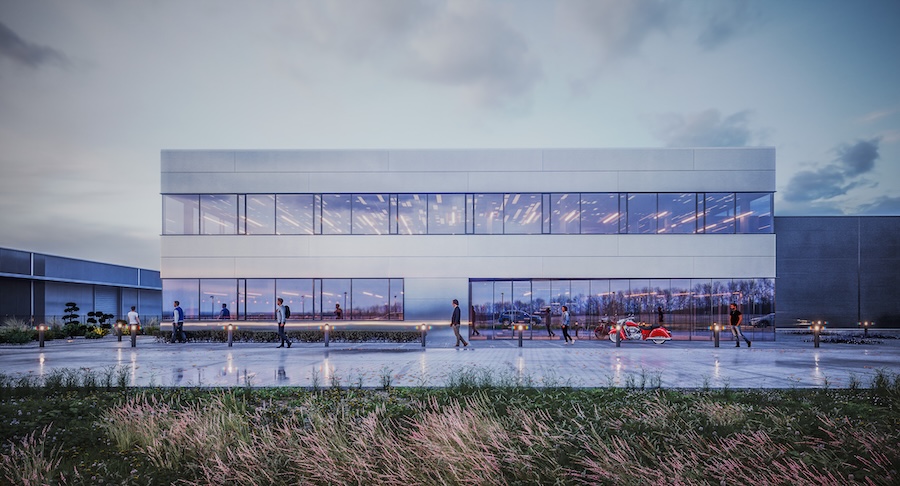
Choosing a hybrid system is a decision that combines functionality with economy. Combining the durability, load-bearing capacity, and fire resistance of reinforced concrete columns with the lightness and cost-effectiveness of a steel roof structure creates an optimal solution for modern halls. Reinforced concrete columns provide a high level of fire safety, effectively resisting fire and maintaining their load-bearing capacity for a long time. They also boast high mechanical resistance – prefabricated columns better withstand accidental impacts, such as those from forklifts, than steel elements. Lightweight steel roof girders, on the other hand, reduce costs, especially with long spans. Thanks to hybrid technology, designers have complete freedom in shaping the space and installing roof systems.
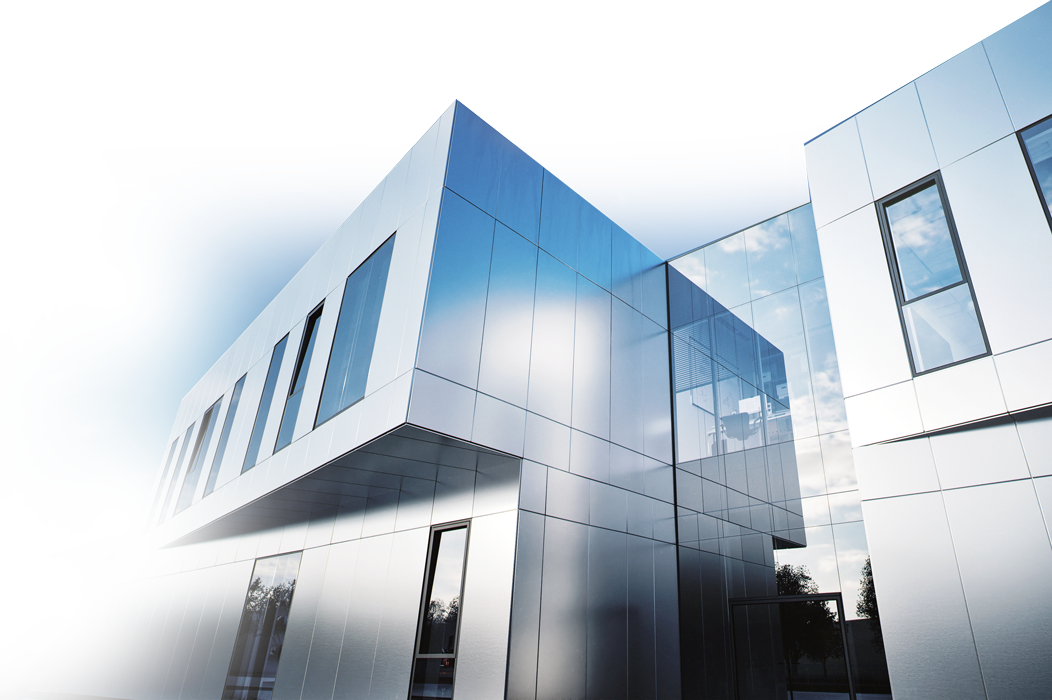
A logistics facility constructed using a hybrid design. Case study.

Building a logistics facility using hybrid technology is an excellent way to optimize warehousing processes, product safety, and investment costs. This solution combines reinforced concrete support columns with a lightweight steel roof, creating a durable, functional, and economical structure.

We implemented a hybrid design for the 40,000 m² Indeka logistics center. Precast reinforced concrete columns form the main load-bearing structure, ensuring high fire resistance and mechanical strength in areas with heavy forklift traffic, while also enabling efficient use of space. The lightweight steel roof structure allowed for large spans and the rapid installation of systems such as sprinklers and lighting, significantly contributing to the optimization of investment costs. The hybrid design used in this project is a well-thought-out compromise that allows for the creation of a safe, durable facility fully adapted to the specific nature of logistics operations, providing optimal space for efficient warehouse operations.

Looking for a designer and reliable contractor for halls with a mixed structure?

Rely on the experience of CoBouw.

Ask for a quote

FAQ

Frequently asked questions about hybrid structures

A hybrid hall is a building with a mixed structural system: the main frame consists of (precast) reinforced concrete columns supporting a lightweight steel roof structure (trusses or plate girders). It is currently the most popular solution in large-area construction, combining the strength advantages of concrete with the economy and lightness of steel.

It is the optimal solution. Reinforced concrete columns provide high stiffness, resistance to impact (e.g. from forklifts) and natural fire resistance without the need for painting. A steel roof, in turn, is much lighter than a concrete one, which allows smaller foundations and large spans without supports. The client gets a durable lower part and an economical upper part of the hall.

Special steel plates or anchor bolts (anchors) are cast into the head of the precast concrete column. The steel girder has a matching end plate, which is bolted to these bolts.

Often yes, in the case of facilities with increased fire protection requirements. Protecting steel columns with fire-resistant paints to class R60 or R120 is very costly. Using concrete columns (which have this resistance "as standard") eliminates that cost, making the hybrid cheaper to build and to maintain later.

Steel and concrete have a similar coefficient of thermal expansion, which allows them to "work together". However, in large facilities CoBouw engineers design appropriate structural expansion joints and use slotted (oval) holes in the connections, to allow the structure to move naturally with temperature changes without the risk of cracking.

This is one of the main advantages of a hybrid over steel. In the zone just above the floor (where trucks move) we have solid concrete. Reinforced concrete columns show much greater resistance to impact from internal transport vehicles.

It is the "first choice" standard for logistics centres, high-bay warehouses, large retail facilities (retail parks) and production halls with overhead cranes. Anywhere that large volume, fire safety and resistance to mechanical damage are needed.

The process is very efficient, because both elements (columns and roof) are prefabricated in parallel at two different plants. On site, erection proceeds in a flow: first we set up a "forest" of concrete columns, and right behind it comes the crew erecting the roof steel. The delivery time is comparable to fully steel halls.

The steel load-bearing roof structure (truss) makes it possible to achieve spans of 40-50 metres without intermediate columns. As a result, the investor gets a huge, open space.

Yes. The steel roof structure is designed to take process loads into account. HVAC units and other installation equipment are placed on dedicated support structures (trimmers), which transfer the loads to the main girders, and these in turn to the concrete columns and foundations.

For the wall cladding we most often use sandwich panels (with a PIR or mineral wool core), which are usually fixed directly to the reinforced concrete columns with steel fasteners. We can also use concrete plinths at the bottom of the wall for additional protection.

Precast columns can have a shape other than rectangular, but this increases the labour involved in making them. They can have a square or rectangular cross-section, and in architectural facilities (e.g. entrances to shopping centres) even a round one. It all depends on the design of the formwork at the precast plant. Columns can also have corbels (short brackets) for crane runway beams or mezzanines.

Yes. The open-web steel roof structure (truss) is ideal for routing sprinkler system pipes. The concrete columns, in turn, provide a safe and stable support for installation risers and hydrants, without needing additional fire-protection insulation, which simplifies fire service inspections.

Definitely. As the general contractor, CoBouw takes responsibility for bringing these two technologies together. Our designers optimise the column and roof sections so that the whole forms a coherent structural system, eliminating the risk of errors at the concrete-steel interface.

For production and industrial halls, a hybrid hall can be a more economical solution than a traditional masonry hall, especially where different structural, process and fire protection requirements have to be combined. A hybrid hall, like steel and reinforced concrete halls, uses prefabricated structural elements prepared beforehand off site. It most often combines steel and reinforced concrete solutions, so that each material can be used where its properties are most beneficial. Prefabricated structural elements are produced in parallel with site preparation and foundation work, and then delivered and erected on site. This reduces the amount of time-consuming work carried out on site and shortens the delivery time compared with traditional masonry construction. In traditional masonry technology, a larger share of the work is done directly on the construction site, which can translate into a longer delivery time for the facility. This work requires a sufficient number of skilled workers, and its progress may depend on weather conditions. Unfavourable weather can therefore further affect the schedule and the completion date of the investment. The total cost of a hybrid hall is affected by, among other things, the floor area and height of the building, its purpose, the structural layout, the required spans, process loads, fire protection requirements and the finishing standard. The most important economic advantages of a hybrid hall are: - the use of prefabricated steel and reinforced concrete elements, - fast erection of the structure on site, - optimal use of different materials in different parts of the facility, - the possibility of adapting the structure to heavy loads and large spans, - easier adaptation of the facility to process and fire protection requirements, - shorter investment delivery time thanks to a high level of prefabrication. That is why, for more demanding industrial investments, a hybrid hall can be an economically more effective alternative to a traditional masonry hall, combining the speed of precast construction with the possibility of making optimal use of steel and reinforced concrete.